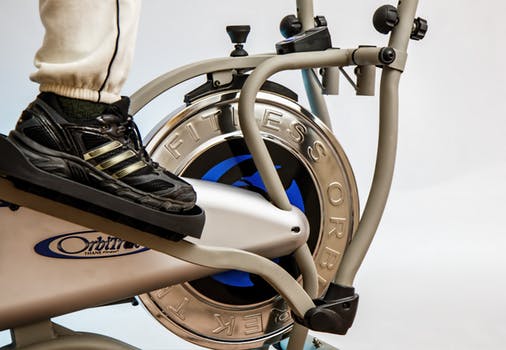
The stationary bike is the most forgiving cardio machine there is. It’s easy on the joints, almost impossible to fall off, quiet enough to use in an apartment and adjustable from a gentle spin to an all-out sprint. Whether you’re just starting to exercise, coming back from an injury or training for a race, a bike can do the job.
Here are the real pros and cons of indoor cycling, how to pick the right type of bike and how to set it up so it’s comfortable and effective.
Key takeaways
- Stationary bikes give you solid cardio with very little impact on the knees, hips and ankles.
- Upright, recumbent and indoor-cycling (spin) bikes suit different people; recumbent is best for back support, spin bikes for intense training.
- Seat height matters most: your knee should be slightly bent at the bottom of the pedal stroke.
- Mix steady rides with short intervals for the best fitness gains.
The pros of stationary bikes
1. Very low impact
Your body weight is supported by the seat, so there’s no pounding. That makes cycling a common choice for people with joint pain, people carrying extra weight and anyone returning from lower-body injuries.
2. Great cardio and endurance
Cycling raises your heart rate and strengthens your heart and lungs. It can be gentle enough for recovery days or hard enough for high-intensity interval training.
3. Leg strength
Pedalling works the quads, glutes, hamstrings and calves. Higher resistance at a slower cadence builds more strength; lighter resistance at a higher cadence builds more endurance.
4. Safe and convenient
No traffic, weather or uneven roads. You can ride while watching something, early in the morning or late at night.
5. Easy to track
Most bikes show time, distance, cadence and estimated calories, so progress is easy to see.
The cons, and how to fix them
| Downside | Fix |
|---|---|
| Saddle soreness | Padded shorts or a gel seat cover, and a correctly set seat height and angle. |
| Boredom | Use intervals, structured rides or a show/podcast you only allow during workouts. |
| Mostly lower body | Add two short strength sessions a week for your upper body and core. |
| Less bone loading than walking or running | Keep some weight-bearing activity in your week, such as walking, stairs or strength training. |
| Calorie readouts can be off | Use heart rate or perceived effort to judge intensity rather than the machine’s calorie number. |
Which type of stationary bike?
| Type | Position | Best for |
|---|---|---|
| Upright bike | Like a road bike but more upright | General fitness, small spaces |
| Recumbent bike | Seated back with a backrest, pedals in front | Back support, older adults, rehab, beginners |
| Indoor cycling (spin) bike | Forward-leaning, heavy flywheel | Intense workouts, classes, interval training |
| Air bike | Moving handles plus a fan for resistance | Full-body, very hard intervals |
How to set up your bike
- Seat height: stand next to the bike; the seat should be roughly at hip height. On the bike, your knee should be slightly bent (about 25–35°) when the pedal is at the bottom.
- Seat position: with pedals level, your front knee should be roughly over the ball of your foot.
- Handlebars: start at seat height or a little higher for comfort. Lower bars mean a more aggressive, forward position.
- Feet: secure them in the straps or clips so your foot doesn’t slip forward.
If your hips rock side to side, the seat is too high. If your knees come up close to your chest, it’s too low.
Three stationary bike workouts
Beginner steady ride (20 minutes)
Five minutes easy, 10 minutes at a moderate effort where talking is possible but a little harder, five minutes easy. Three times a week.
Intervals (25 minutes)
Five-minute warm-up, then eight rounds of 30 seconds hard and 90 seconds easy, then a four-minute cool-down.
Free tool
Interval Timer — set 30 seconds work and 90 seconds rest; it beeps every switch so you never need to watch the clock.
Hill climb (30 minutes)
Warm up five minutes. Then raise the resistance a little every two minutes for 16 minutes while keeping your cadence steady, ease off for four minutes and repeat a shorter climb. Cool down five minutes.
How many calories does a stationary bike burn?
A 70 kg (155 lb) person burns roughly 200–300 calories in 30 minutes of moderate cycling and around 300–400 at a vigorous effort. Heavier riders burn more.
Free tool
Calories Burned Calculator — enter your weight and ride time to estimate calories for stationary cycling and other activities.
Frequently asked questions
Is a stationary bike good for weight loss?
It helps. Cycling burns a good number of calories with little joint stress, so you can do it often. Combine it with a calorie deficit from your diet for steady weight loss.
How long should I ride each day?
Twenty to forty-five minutes on most days is a good range. Beginners can start with 10–15 minutes and build up.
Is a recumbent bike as good as an upright one?
For cardio, both work well. Recumbent bikes feel easier on the back and are more comfortable for many people; upright and spin bikes involve the core a little more.
Will cycling make my legs bulky?
Unlikely. Cycling mostly builds endurance. Large leg muscles come from heavy strength training and a calorie surplus.
This article is for general information and isn’t a substitute for advice from your doctor or another qualified health professional. Check with them before starting a new exercise or eating plan, especially if you have a health condition, are pregnant or take medication.