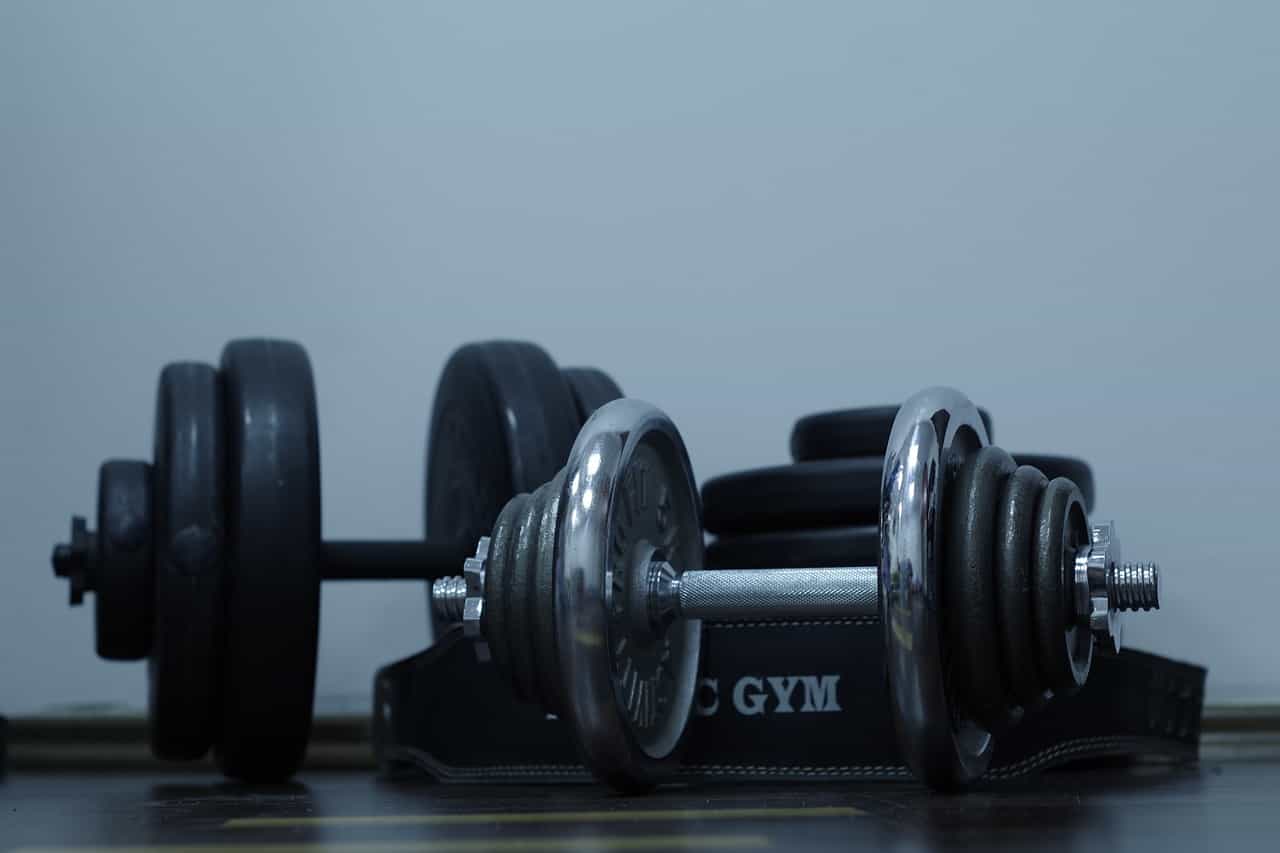
Bodybuilding is the practice of building muscle size, shape and symmetry through resistance training, nutrition and recovery. For some people it’s a competitive sport judged on stage. For most, it’s simply a way to train: lifting to look and feel stronger, with a focus on muscle growth rather than how much weight you can move.
This beginner’s guide covers what bodybuilding actually involves, how it differs from powerlifting and general fitness, and the basic principles that make muscles grow.
Key takeaways
- Bodybuilding focuses on muscle size and proportion, while powerlifting focuses on maximum strength in three lifts.
- Muscles grow from progressive overload, enough training volume, enough protein and enough recovery.
- Beginners grow best on simple full-body or upper/lower plans, three to four days a week.
- Expect around 0.5–1 kg (1–2 lb) of muscle a month in the first year, less after that.
Bodybuilding vs powerlifting vs general fitness
| Bodybuilding | Powerlifting | General fitness | |
|---|---|---|---|
| Main goal | Muscle size, shape, symmetry | Heaviest single lift in squat, bench, deadlift | Health, energy, all-round fitness |
| Typical reps | 6–15 per set | 1–6 per set | Varies |
| Exercise choice | Many exercises from different angles | Focus on the big three plus helpers | Strength, cardio, mobility |
| Nutrition | Precise; bulking and cutting phases | Enough to fuel strength | Balanced, sustainable |
How muscles grow
Muscle growth, called hypertrophy, happens when training challenges a muscle beyond what it’s used to and you then give it the nutrients and rest to adapt. Four principles do most of the work:
1. Progressive overload
Gradually do more over time: more weight, more reps, more sets or better technique. Without progression, your body has no reason to change.
Free tool
Progressive Overload Planner — build a week-by-week plan that adds weight or reps steadily.
2. Enough training volume
Volume is roughly sets × reps × weight. Around 10–20 hard sets per muscle group per week is a common, effective range. Beginners grow well at the lower end.
Free tool
Training Volume Calculator — add up your sets, reps and weight to track your weekly volume.
3. Train close to failure
Sets that end 1–3 reps short of failure, where you couldn’t do many more with good form, give a strong growth signal. Most sets in the 6–15 rep range work well for building muscle.
4. Recovery: food and sleep
Muscle is built after the workout. That takes enough calories, about 1.6 g of protein per kg of body weight a day, and 7–9 hours of sleep. Read more in sleep and muscle recovery.
The basic bodybuilding exercises
Beginners should build their training around compound lifts, which work several muscles at once, then add isolation exercises for detail.
| Muscle group | Compound lifts | Isolation exercises |
|---|---|---|
| Chest | Bench press, push-up, dumbbell press | Dumbbell fly |
| Back | Pull-up, rows, deadlift | Straight-arm pulldown |
| Legs | Squat, lunge, Romanian deadlift | Leg curl, leg extension, calf raise |
| Shoulders | Overhead press | Lateral raise, rear fly |
| Arms | Chin-up, dips, close-grip bench | Biceps curl, triceps extension |
See our guide to bodybuilding training exercises for technique and variations.
A simple beginner plan
Three full-body sessions a week (for example Monday, Wednesday, Friday) is a proven way to start:
- Squat or goblet squat: 3 × 8–12
- Bench press or push-up: 3 × 8–12
- Row (dumbbell or barbell): 3 × 8–12
- Romanian deadlift: 3 × 8–12
- Overhead press: 2 × 8–12
- Biceps curl and triceps extension: 2 × 10–15 each
Add a little weight whenever you hit the top of the rep range on every set. For a ready-made routine, see our bodybuilding workout plan.
Free tool
Workout Generator — build a muscle-building workout for your equipment, time and level, with demo videos.
Bodybuilding nutrition basics
- Calories: a small surplus (around 200–300 kcal above maintenance) supports muscle gain with limited fat gain. A deficit is used later to “cut” fat.
- Protein: about 1.6 g per kg a day, spread across 3–5 meals.
- Carbohydrates fuel hard training; fats support hormones and health.
Our guides to bodybuilding power foods and power meals have food ideas.
Free tool
Macro Calculator — set your daily protein, carbs and fat for building muscle.
How fast can you build muscle?
Beginners with good training and nutrition can often gain roughly 0.5–1 kg (1–2 lb) of muscle a month in the first year. Progress slows as you get more experienced, which is normal. Genetics, age, sex and consistency all play a part.
Frequently asked questions
Do I need supplements to build muscle?
No. Food covers almost everything. Protein powder is a convenient way to hit protein targets, and creatine monohydrate is one of the best-researched supplements for strength and muscle, but neither is essential.
How many days a week should a beginner lift?
Three or four. Full-body three times a week or an upper/lower split four times a week both work well.
Can women do bodybuilding?
Absolutely. The same principles apply. Women typically build muscle a little more slowly in absolute terms, and won’t get “bulky” by accident.
Is bodybuilding safe?
Natural bodybuilding with good technique and sensible progression is safe for most healthy people. Performance-enhancing drugs carry serious health risks.
This article is for general information and isn’t a substitute for advice from your doctor or another qualified health professional. Check with them before starting a new exercise or eating plan, especially if you have a health condition, are pregnant or take medication.