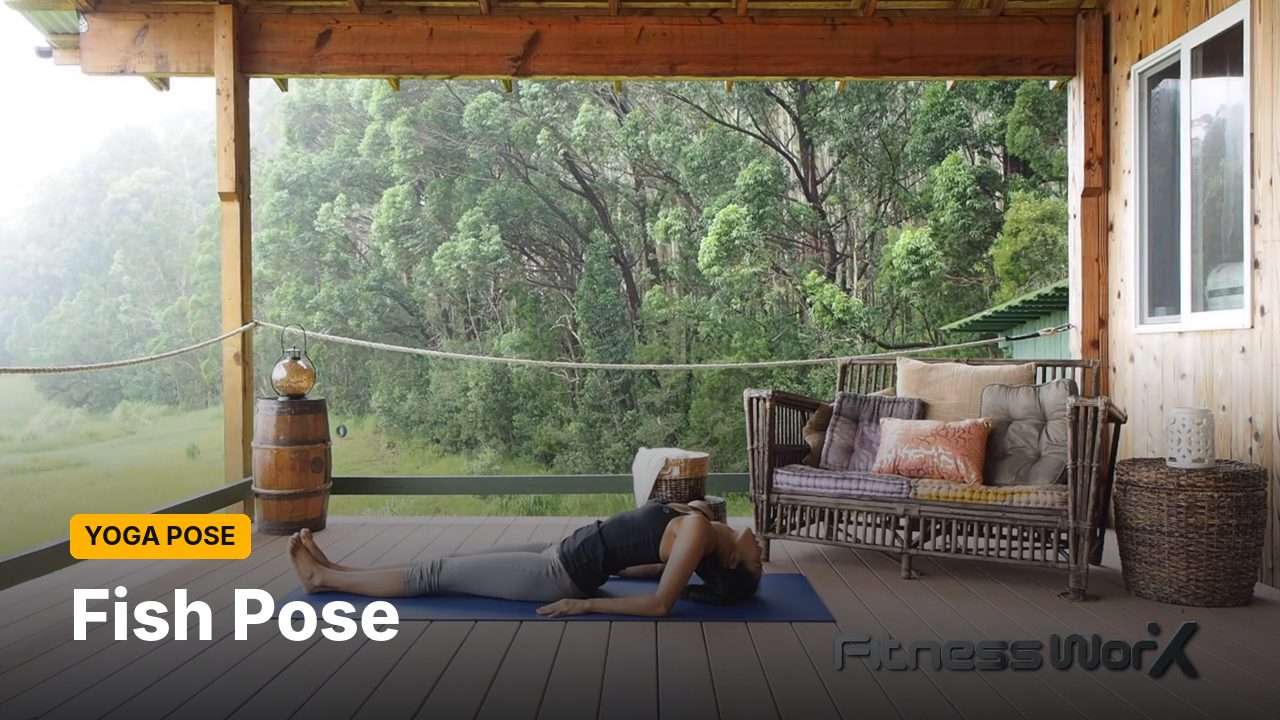
Fish Pose (Matsyasana) is a gentle backbend done lying on the floor. You lean back on your forearms, lift your chest and let the top of your head rest lightly on the mat. It opens the front of the chest and shoulders, which often feel tight after a day of sitting or driving.
The classic version asks a lot of your neck, so this guide shows you how to keep most of your weight in your arms. You will also find supported versions with a cushion or block that suit stiff backs and people over 40 very well.
At a glance
- Type: gentle supine backbend and chest opener
- Level: beginner with props; intermediate for the full version
- Hold: 3 to 5 slow breaths, building up to 30 seconds
- Props: a firm cushion, rolled blanket or yoga block (optional)
How to Do Fish Pose
In the video, the instructor starts seated with both legs straight. She leans back onto her forearms, lifts her chest and lowers her head until the crown just touches the mat. For a few breaths she slides her arms long beside her body, then comes back onto her elbows, lifts her head and sits up. Sliding the arms out puts more weight on the head, so beginners should keep their forearms down.
- Sit with your legs long. Sit on your mat with both legs straight and together. Keep your thighs gently firm and let your feet relax.
- Lean back onto your forearms. Place your hands under your hips or beside them, palms down. Lower onto your elbows one at a time so they sit under your shoulders.
- Lift your chest. Press your forearms into the floor and draw your shoulder blades together. Let your upper back arch and your chest rise towards the ceiling.
- Lower your head with care. Slowly tip your head back. Only let the top of your head touch the mat if it feels easy. Keep almost all your weight in your forearms, not your neck.
- Breathe into your chest. Take 3 to 5 slow breaths. Feel your ribs widen as you breathe in.
- Come out slowly. Press into your forearms and lift your head first. Then lower your back to the floor, or press up to sitting as the instructor does.
Benefits of Fish Pose
Fish Pose stretches the chest, the front of the shoulders and the throat. Many people find this feels good after hours spent hunched over a desk or phone. It also asks the muscles of the upper back to work, which can help you notice better posture.
Because the chest is open, breathing can feel fuller here. Some people like it as a short, calming pause near the end of a practice. Like any single pose, it is one small part of staying active, not a fix for back or breathing problems.
Modifications
- Supported Fish: Lay a rolled blanket or a firm cushion across the mat. Lie back so it sits under your shoulder blades. Rest your head on a second cushion. This is the best place for most beginners to start.
- Block version: Place one block under your upper back and another, a little higher, under your head. Nothing has to strain.
- Head lifted: Keep your chin tucked slightly towards your chest instead of tipping your head back. This takes the neck out of the pose.
- Knees bent: Bend your knees with feet flat if your lower back feels pinched with straight legs.
Skip or change this pose if
- you have a neck injury, neck arthritis or pain when tilting your head back. Use the head-lifted or fully supported version.
- you feel dizzy, light-headed or get a headache when your head is tipped back. Come out at once.
- you have uncontrolled high or low blood pressure. Keep your head supported and level, or skip the pose.
- you have a lower back problem that feels worse when you arch. Try the supported version with bent knees, or leave it out.
- you are pregnant, especially after the first trimester. Ask your midwife or doctor before doing backbends lying down.
- you have had recent surgery on your neck, spine, chest or abdomen.
Stop if you feel sharp pain, tingling or numbness in your arms or hands.
Poses That Go Well With Fish Pose
Fish Pose is often placed after a pose that bends the neck forward, so the two balance each other. Good partners include Bridge Pose, a gentle supine twist and Child’s Pose as a counter stretch. You can see many of these demonstrated in our yoga pose videos.
New to yoga? Our yoga for beginners guide covers breathing, kit and safety. You can also browse the yoga hub, read about yoga for health, or use the Yoga Flow Builder to fit Fish Pose into a short sequence.
Yoga
Practice with a guided session
Pick your time and level and follow a yoga session with a video for every pose.
FAQ
Is Fish Pose bad for your neck?
It can be if you put your body weight on your head. Keep the weight in your forearms and let the crown touch lightly, or keep your head lifted. If you have neck problems, use the supported version with a cushion under your head.
What should I do after Fish Pose?
Lie flat for a few breaths, then hug your knees to your chest or rest in Child’s Pose. A gentle forward bend also feels good after a backbend.
Can I do Fish Pose on a bed?
A soft mattress makes it hard to support your elbows evenly. A firm floor with a mat is safer. If getting down to the floor is hard, try the supported version on a firm sofa cushion placed on the floor.
This page is for general information and isn’t a substitute for advice from your doctor, physiotherapist or another qualified health professional. Check with them before starting a new exercise program, especially if you have a health condition or injury, are pregnant or have recently given birth. Stop if you feel pain, dizziness or unusual shortness of breath.