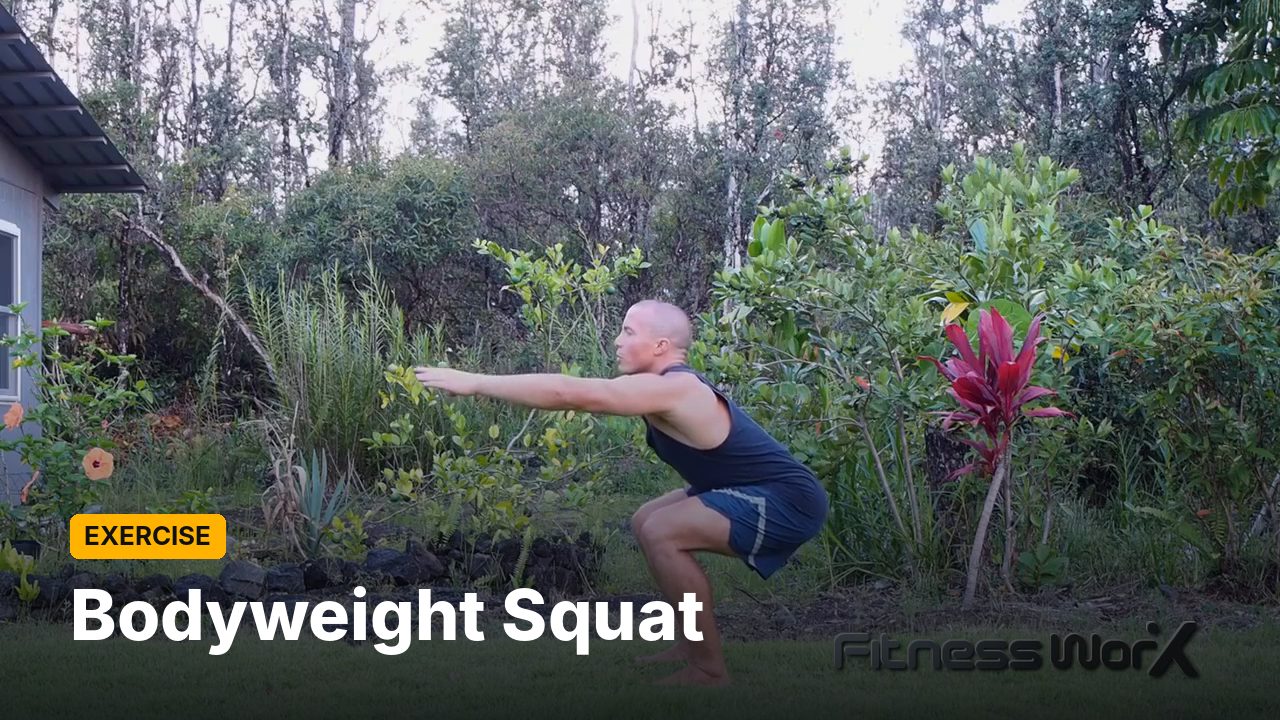
The bodyweight squat is a move you already do every time you sit down on a chair and stand up again. Done with good form, it works your thighs, glutes and core, and it builds the leg strength you use for stairs, gardening and getting up off the floor.
You need no equipment and only a small patch of floor. That makes it a good first exercise for complete beginners and for adults over 40 who want to stay strong at home.
At a glance
- Works: front of the thighs (quadriceps), glutes, hamstrings, calves and core
- Equipment: none; a sturdy chair behind you is optional
- Level: beginner
- Beginner sets and reps: 2 sets of 8 to 10 reps, with about 60 seconds rest
How to Do a Bodyweight Squat
- Set your feet. Stand with your feet about hip- to shoulder-width apart and your toes turned out slightly. Spread your weight across the whole foot.
- Brace gently. Stand tall, relax your shoulders and tighten your stomach muscles a little, as if you were ready for a light nudge.
- Start with your hips. Push your hips back as if you were reaching for a chair behind you. Let your knees bend at the same time.
- Lower with control. Sit down until your thighs are close to level with the floor, or as low as feels comfortable. Keep your chest up and your back long.
- Watch your knees. Keep your knees pointing the same way as your toes. It is normal for them to move a little in front of your toes.
- Stand back up. Press through your whole foot and straighten your hips and knees together. Squeeze your glutes gently at the top.
- Keep breathing. Breathe in as you lower and breathe out as you stand.
Common Mistakes
- Knees falling inward. If your knees drift toward each other, think about pushing them gently out over your middle toes. Going a little less deep also helps.
- Heels lifting. Rising onto your toes puts more load on the front of your knees. Shift your weight back toward your heels and keep the whole foot on the floor.
- Rounding the back. Letting your chest fold forward can strain your lower back. Look ahead, keep your chest open and only go as low as you can with a long spine.
- Dropping too fast. Falling into the bottom takes away control. Take two or three seconds to lower yourself.
- Holding your breath. Steady breathing keeps the effort smoother. Breathe in on the way down and out on the way up.
Easier and Harder Versions
If a full squat feels hard on your knees or your balance, start with a box squat. Place a sturdy chair behind you, sit down lightly, then stand up again. You can also hold the back of a chair or a kitchen counter in front of you for support.
Once you can do 2 sets of 15 with good form, make it harder by slowing down. Try three seconds on the way down and a one-second pause at the bottom. After that, you can hold a weight at your chest (a goblet squat) or try a split squat with one foot forward. Jump squats are a later step for people with healthy knees and good balance.
Sets, Reps and How Often
Begin with 2 sets of 8 to 10 reps and rest about a minute between sets. Squat 2 or 3 days a week, with a rest day in between. The CDC recommends muscle-strengthening activity for all major muscle groups on at least 2 days a week, and squats cover your legs well.
Add 1 or 2 reps each week until you reach 15, then move to a harder version. Warm up first with a few minutes of marching on the spot; our warm-up generator can pick the moves for you. Write down your sets in the workout log so you can see your progress.
When squats feel easy, browse the exercises hub or our list of essential weight training exercises for your next step.
Safety
- Stop if you feel sharp pain in a knee, hip or your back, or if you feel dizzy, short of breath or have chest pain.
- Skip or modify if you have had recent knee or hip surgery or a joint replacement. Follow your surgeon or physiotherapist on how deep to go.
- Use support from a chair or counter if your balance is unsteady.
- If you are pregnant, squats are often fine, but check with your midwife or doctor and widen your stance as needed.
- Mild muscle soreness a day or two later is normal. Joint pain is not.
Free tool
No-Equipment Home Workout
Put squats into a short routine with our free no-equipment home workout.
FAQ
How many squats should a beginner do?
Start with 2 sets of 8 to 10 reps, 2 or 3 days a week. Light daily squats are fine for many people, but rest days help your muscles recover and get stronger.
Are squats bad for your knees?
For most people, squats done with good form are not bad for the knees, and stronger legs may help your knees feel better. If you have knee pain, squat to a chair, reduce the depth and ask a physiotherapist for advice.
How low should I squat?
Go as low as you can while your heels stay down and your back stays long. For many beginners that is about chair height, and that is a perfectly good squat.
This page is for general information and isn’t a substitute for advice from your doctor, physiotherapist or another qualified health professional. Check with them before starting a new exercise program, especially if you have a health condition or injury, are pregnant or have recently given birth. Stop if you feel pain, dizziness or unusual shortness of breath.