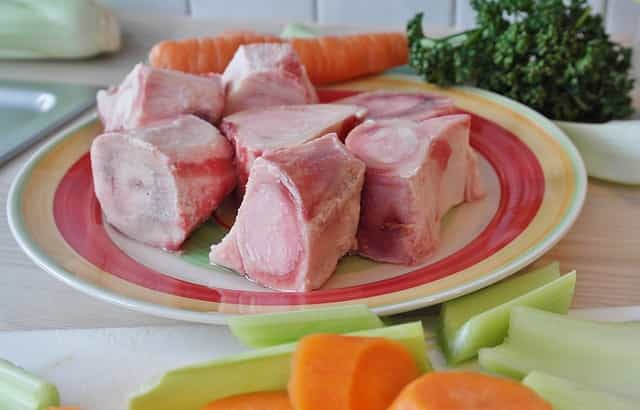
Bone broth has gone from grandmother’s remedy to trendy health drink, with claims that it heals the gut, smooths skin and eases joint pain. Some of that is hype. But it’s also a cheap, warming, high-protein food that uses up leftovers and makes a great base for soups. Here’s what the evidence says, and how to make it at home.
Key takeaways
- Bone broth is made by simmering bones (often with vegetables) for 8–24 hours or more.
- A cup provides roughly 6–10 g of protein for few calories, plus collagen-derived gelatin and some minerals.
- Claims about gut healing, skin and joints are largely unproven; collagen in broth is broken down like any protein.
- It’s a healthy, hydrating food. Watch the salt in shop-bought versions.
Broth, stock and bone broth: what’s the difference?
| Broth | Stock | Bone broth | |
|---|---|---|---|
| Made from | Mostly meat | Mostly bones | Bones, often with some meat and connective tissue |
| Simmer time | 1–2 hours | 3–6 hours | 8–24+ hours |
| Texture | Thin | Gels when cold | Gels firmly when cold |
| Typical use | Sipping, light soups | Sauces, soups, gravies | Sipping, soups, cooking grains |
In practice the terms overlap. “Bone broth” is mostly a long-cooked stock that’s seasoned for drinking.
What’s in bone broth?
- Protein: mostly gelatin (cooked collagen). A cup of a well-made broth may have 6–10 g; shop-bought versions vary widely.
- Amino acids: glycine, proline and glutamine are abundant in gelatin.
- Minerals: small amounts of potassium, phosphorus and magnesium. Calcium content is usually low, despite the bones.
- Sodium: can be high in commercial broths.
Claimed benefits: what the evidence says
| Claim | Evidence |
|---|---|
| Heals the gut (“leaky gut”) | No good human studies on bone broth; glutamine and gelatin have only been studied as supplements |
| Improves skin and reduces wrinkles | Some studies of collagen peptide supplements show small effects; bone broth itself hasn’t been tested |
| Eases joint pain | Collagen supplements have mixed results; no strong evidence for broth |
| Helps with weight loss | A high-protein, low-calorie, warm drink can help you feel full, but it’s not magic |
| Helps when you’re ill | Warm fluids aid hydration and soothe the throat; a sensible choice when appetite is low |
| Supports recovery after exercise | Provides protein and fluid, though less complete protein than meat, dairy or eggs |
Bottom line: bone broth is a nutritious, comforting food, but it isn’t a cure-all.

How to make bone broth
Ingredients (makes about 3 litres)
- 1.5–2 kg (3–4 lb) bones: chicken carcasses, wings and feet, or beef knuckle, marrow and oxtail
- 2 carrots, 2 celery sticks and 1 onion, roughly chopped
- 2 tbsp apple cider vinegar
- 2 bay leaves, a few peppercorns, a handful of parsley
- About 4 litres cold water
Method
- Roast the bones (beef especially) at 200°C / 400°F for 30–40 minutes for a deeper flavour.
- Add everything to a large pot and cover with cold water. Leave for 30 minutes so the vinegar can start working.
- Bring to a boil, then lower to a bare simmer. Skim off foam in the first hour.
- Simmer chicken bones for 8–12 hours and beef bones for 12–24 hours, topping up with water as needed. A slow cooker on low or a pressure cooker (2–3 hours) also works.
- Strain and cool quickly. Refrigerate; skim the fat once it sets.
- Season with salt to taste when you serve it.
Storage: up to 4–5 days in the fridge or 3 months in the freezer. Freezing in ice-cube trays gives handy portions.
Ways to use it
- Sip a mug warm with a pinch of salt, ginger or lemon.
- Use instead of water to cook rice, quinoa or lentils.
- Make the base for soups, stews and risotto.
- Add to sauces and gravies.
Free tool
Protein Calculator — see how much protein you need each day.
Frequently asked questions
Is bone broth good for you?
Yes, as part of a balanced diet. It’s hydrating and provides protein for few calories. Just don’t rely on it for big health claims.
Is shop-bought bone broth as good as homemade?
It varies. Some contain much less protein and a lot more salt. Check the label for protein per serving and sodium.
Is bone broth safe?
For most people, yes. Some studies have found small amounts of lead in broths, but levels are generally low. Use bones from good-quality sources and vary your diet.
Related: superfoods and foods for the immune system.
This article is for general information and isn’t a substitute for advice from your doctor or another qualified health professional. Check with them before starting a new exercise or eating plan, especially if you have a health condition, are pregnant or take medication.