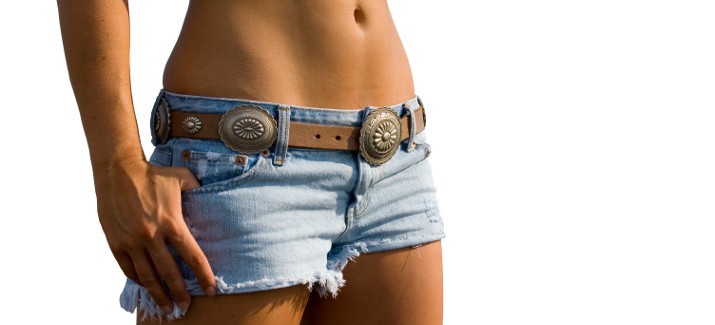
Love handles are the pads of fat that sit on the sides of your waist, just above the hips. Almost everyone who’s tried to lose them has been told to do hundreds of side bends and twists. Unfortunately, that doesn’t work: you can’t choose where your body burns fat. What does work is losing overall body fat with a small calorie deficit, strength training, cardio, sleep and stress management, and training your core so the area looks tighter as the fat comes off. Here’s the complete plan.
Key takeaways
- Spot reduction is a myth: side crunches strengthen the obliques but don’t burn the fat on top of them.
- Fat loss comes from a calorie deficit, ideally 300–500 calories a day below maintenance.
- Strength training 2–4 times a week preserves muscle; cardio and daily steps increase calorie burn.
- High protein, plenty of vegetables and fewer sugary drinks and refined snacks make the deficit easier.
- Waist fat is linked to type 2 diabetes and heart disease, so losing it matters for health, not just looks.
- Expect it to take weeks to months; the waist is often one of the last places fat leaves.
Why do love handles form?
Love handles are subcutaneous fat (fat under the skin) stored around the waist. Where your body stores fat depends largely on genetics, sex and hormones. Men tend to store more around the waist; women more on the hips and thighs until menopause, after which waist storage increases. Other factors include:
- Eating more calories than you burn over time.
- Low activity and lots of sitting.
- Poor sleep and chronic stress, which raise cortisol and appetite.
- Alcohol and sugary drinks, which add calories easily.
- Age-related loss of muscle, which lowers daily calorie needs.
Why waist fat matters for health
Fat around the middle, especially the deeper visceral fat around the organs, is more strongly linked with health problems than fat elsewhere. A large waist is associated with insulin resistance, type 2 diabetes, high blood pressure, unhealthy cholesterol and heart disease. Insulin resistance means your cells respond poorly to insulin, so blood sugar stays higher and the body tends to store more fat. The good news: visceral fat often responds quickly to exercise and weight loss.
| Measure | Lower risk | Higher risk |
|---|---|---|
| Waist-to-height ratio | Below 0.5 (waist less than half your height) | 0.5 and above; 0.6+ is high |
| Waist (men) | Below 94 cm / 37 in | 102 cm / 40 in or more |
| Waist (women) | Below 80 cm / 31.5 in | 88 cm / 35 in or more |
Thresholds are lower for some ethnic groups, particularly South Asian people. Measure halfway between your lowest rib and the top of your hip bone, after breathing out.
Free tool
Waist-to-Height Ratio Calculator — check your waist-related health risk in seconds.
Your core muscles

- Rectus abdominis: the “six-pack” muscle running down the front; flexes the spine.
- External obliques: the outer muscles on the sides of your waist, directly under the love handles; rotate and side-bend the trunk.
- Internal obliques: a thinner layer beneath the external obliques, working with them on rotation.
- Transversus abdominis: the deepest layer, wrapping around your middle like a corset to stabilise the spine.
- Erector spinae and multifidus: the muscles along the spine that keep you upright.
Training these muscles improves posture, protects your back and makes your waist look firmer once the fat on top is reduced.
Why spot reduction doesn’t work
When you exercise, your body draws energy from fat stores all over the body, not just from the muscle you’re working. Studies where people trained one area intensively for weeks found no extra fat loss in that area. So the plan below targets total body fat, plus core work for strength and shape.
Step 1: Eat in a small calorie deficit
To lose fat, you need to burn more energy than you eat. A deficit of about 300–500 calories a day typically produces 0.5–1% of body-weight loss a week, which is sustainable and helps you keep muscle. Bigger deficits often backfire (see the yo-yo diet).
Free tool
Calorie Calculator — find your maintenance calories and a fat-loss target.
Step 2: Build your meals around protein, vegetables and fibre
- Protein at every meal (chicken, fish, eggs, Greek yogurt, beans, tofu): about 1.6–2.2 g per kg of body weight a day keeps you full and protects muscle.
- Half the plate vegetables: lots of volume and fibre for few calories.
- Whole-food carbs (oats, potatoes, rice, fruit, beans) in portions that fit your target.
- Healthy fats (olive oil, nuts, avocado, oily fish) in moderate amounts; they’re calorie-dense.
- Cut back on sugary drinks, alcohol, pastries, sweets and fried snacks, which add calories without filling you up.
Free tool
Protein Calculator — set your daily protein target for fat loss.
Step 3: Strength train 2–4 times a week
Lifting weights helps you keep (or build) muscle while you lose fat, so more of the weight you lose is fat. Focus on big compound movements that work lots of muscle at once:
- Squats or leg press
- Deadlifts or Romanian deadlifts
- Push-ups or bench press
- Rows and pulldowns or pull-ups
- Overhead press
- Loaded carries (farmer’s walk, suitcase carry), which also train the obliques hard
Free tool
Workout Generator — get a full-body strength workout for your level and equipment.
Step 4: Add cardio and move more every day
Aim for at least 150 minutes of moderate cardio (brisk walking, cycling, swimming) or 75 minutes of vigorous cardio a week. Interval training (HIIT) is time-efficient but not magic; total weekly activity matters most. Everyday movement (steps, taking stairs, standing breaks) can burn hundreds of extra calories a day.
Free tool
Steps Calculator — see how many calories your daily steps burn.
Step 5: Train your core
Two or three times a week, add 10 minutes of core work. These moves strengthen the obliques and deep core without straining your back:
| Exercise | How to do it | Sets × reps |
|---|---|---|
| Side plank | Lie on your side, prop up on your forearm, lift your hips so your body forms a straight line. Hold. | 3 × 20–45 s each side |
| Dead bug | On your back, arms up, knees bent at 90°. Lower the opposite arm and leg slowly, keeping your lower back down. | 3 × 8 each side |
| Bicycle crunch | On your back, bring opposite elbow towards opposite knee in a slow pedalling motion. | 3 × 10–15 each side |
| Pallof press | Hold a band or cable at your chest, side-on to the anchor, and press straight out, resisting the twist. | 3 × 10 each side |
| Hanging or captain’s chair knee raise | Support yourself on a chair or hang from a bar and lift your knees towards your chest without swinging. | 3 × 8–12 |
| Suitcase carry | Hold a heavy dumbbell in one hand and walk tall without leaning. | 3 × 30 m each side |
| Bird dog | On hands and knees, extend opposite arm and leg, keeping your back flat. | 3 × 8 each side |
Free tool
Home Workout — a guided, timed bodyweight session with demo videos, including core moves.
Step 6: Sleep and manage stress
People who sleep less than about six hours tend to eat more and carry more abdominal fat. Chronic stress raises cortisol, which encourages fat storage around the middle and increases cravings. Aim for 7–9 hours of sleep and build in daily stress relief: walks, exercise, breathing exercises or time with friends.
Free tool
Sleep Calculator — find the right bedtime for a full night’s sleep.
Step 7: Track your progress
Weigh yourself a few times a week and look at the weekly average, and measure your waist every two weeks. Your waist measurement can shrink even when the scale barely moves, especially if you’re building muscle.
Free tool
Body Measurements Tracker — log your waist, hips and other measurements over time.
What about supplements and fat burners?
No supplement removes love handles. “Fat burners” usually rely on caffeine and have little effect on fat loss, and some contain risky stimulants. A multivitamin or fish oil may help fill gaps in your diet, but they don’t replace the steps above.
Frequently asked questions
How long does it take to lose love handles?
It depends on how much fat you have to lose. At a steady 0.5–1% of body weight a week, most people see a noticeable difference within 8–12 weeks, though the last bit around the waist is often the slowest to go.
Do side bends get rid of love handles?
No. They work the obliques, which can make your waist look thicker if heavily loaded. Fat loss comes from your overall diet and activity.
Can I get rid of love handles without going to the gym?
Yes. Bodyweight or dumbbell strength training at home, brisk walking and a calorie deficit work well.
Why do I still have love handles even though I’m slim?
Genetics play a big role in where you store fat. Building muscle, especially in the back, shoulders and glutes, can change your shape, and a slightly lower body fat may be needed to shift the last of it.
Related: the yo-yo diet, heart health and how to start jogging.
This article is for general information and isn’t a substitute for advice from your doctor or another qualified health professional. Check with them before starting a new exercise or eating plan, especially if you have a health condition, are pregnant or take medication.