Long slow deep breathing is one of the first techniques taught in Kundalini yoga. You fill your lungs from the belly up to the chest, then empty them slowly in the same smooth way. Kundalini teachers usually aim for eight breaths a minute or fewer, and slower with practice.
It needs no equipment, no special flexibility and no experience. That makes it a good Sunday reset after a week of workouts, and a simple first step for anyone new to breathing practice.
At a glance
- Good for: winding down, easing tension after exercise, learning to breathe low and slow
- Time: 3 minutes to start; build up to 5 to 11 minutes
- Position: lying on your back, as in the video, or sitting tall
- Pace: about 5 breaths a minute (in for 5 seconds, out for 7)
How to Do Long Slow Deep Breathing
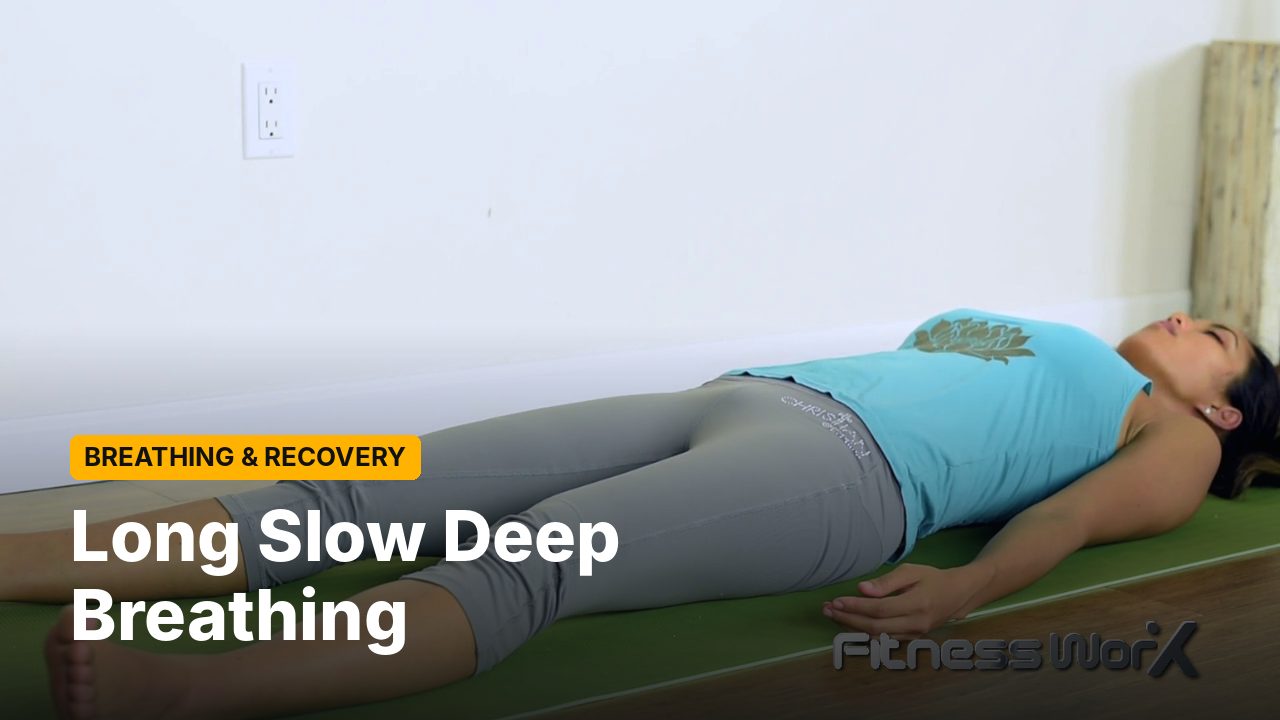
In the video the instructor lies flat on a mat, legs relaxed and slightly apart, arms a little away from her body. Nothing moves except her breath, so watch her belly and chest rise and fall.
- Get comfortable. Lie on your back with your legs long and your arms by your sides, palms resting on the mat. Put a cushion under your knees if your lower back feels tight.
- Close your eyes and breathe normally. Take a few ordinary breaths through your nose and let your body grow heavy.
- Fill from the bottom. Breathe in slowly through your nose. Let your belly rise first, then your ribs widen, then your upper chest lift a little.
- Empty from the top. Breathe out slowly through your nose. Let your chest soften, then your ribs, then gently draw your belly in to finish.
- Find a slow rhythm. Aim for about 5 counts in and 7 counts out. If that feels like a strain, use 3 in and 4 out instead.
- Finish gently. After three minutes, let your breath return to normal. Lie still for a few breaths before you roll to your side and sit up.
When to Use It
Many people find this breath most helpful at the end of the day. A few minutes in bed can make it easier to switch off. It also works well after a workout such as the 10-minute bodyweight starter workout, when your heart rate is coming down.
You can also use it before a short home yoga practice to help you arrive on the mat. If you sit at a desk all day, try a seated version during a break. The steps are the same; just sit tall with your feet flat on the floor.
Tips for Beginners
- Slow beats big. You do not need the biggest breath possible. A smooth, steady breath matters more than a full one.
- Use a hand as a guide. Rest one hand on your belly and one on your chest. Feel the belly move first, then the chest.
- Keep your shoulders quiet. If your shoulders rise toward your ears, you are breathing too high. Let them stay heavy on the mat.
- Count softly. Counting in your head keeps your mind busy and your pace even.
- Be patient. Five breaths a minute can feel slow at first. Short daily practice usually makes it feel easier.
To see how this breath fits into the wider Kundalini style, read our guide to Kundalini yoga. Our yoga for beginners guide also explains how breathing links to the poses.
Stop if...
- You feel dizzy, light-headed or tingly. Breathe normally and rest until it passes, then try a shorter, softer breath.
- You feel short of breath or your chest feels tight. Stop and breathe at your normal pace.
- Lying flat is uncomfortable, or you are past the first trimester of pregnancy. Sit upright or lie propped up on pillows instead.
- You have asthma, COPD or a heart condition. Check with your doctor before starting any new breathing practice.
- You are driving or need to stay alert. Practise only when you are sitting or lying somewhere safe.
- Slowing your breath makes you feel more anxious. Stop, open your eyes and breathe normally. You can try again another day with fewer counts.
Free tool
Breathing Exercise Timer
Let our breathing timer pace each breath at 5 counts in and 7 counts out.
Yoga
Practice with a guided session
Pick your time and level and follow a yoga session with a video for every pose.
FAQ
Is long slow deep breathing the same as belly breathing?
It starts the same way, with the belly rising first. Long slow deep breathing then carries the breath up into the ribs and chest, so the lungs fill more fully.
How long should I practise long slow deep breathing?
Start with three minutes. When that feels easy, build up to five minutes. Many Kundalini classes use 11 minutes, but there is no need to rush toward that.
Can I do this breathing sitting up?
Yes. Sit tall on a chair or cushion with your spine long and your hands resting on your thighs. Lying down, as shown in the video, is often easier for beginners because your body is fully supported.
This page is for general information and relaxation, not medical or mental health care. If you feel lightheaded, dizzy or uncomfortable, stop and breathe normally. Check with your doctor first if you have a heart, lung or blood pressure condition, or are pregnant.