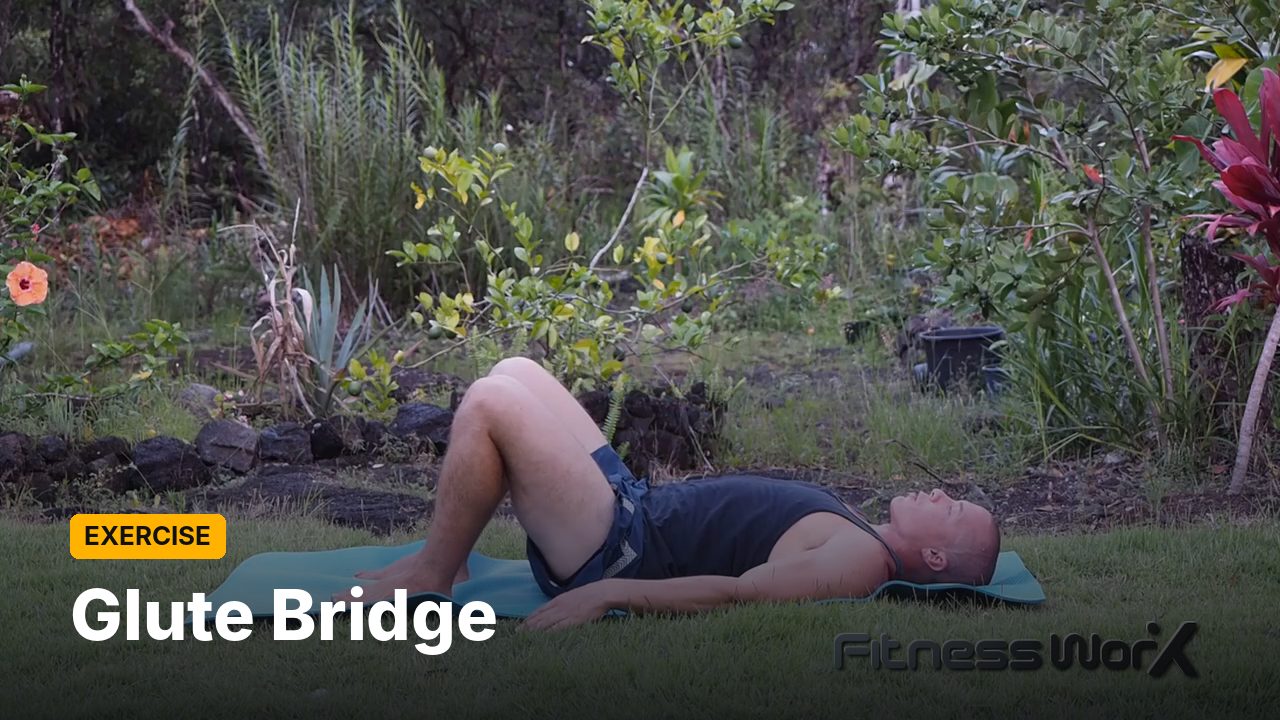
Long hours in a chair leave your glutes with very little to do. The glute bridge wakes them up. You lie on your back, plant your feet and lift your hips toward the ceiling, which works your glutes, hamstrings and the muscles along your lower back.
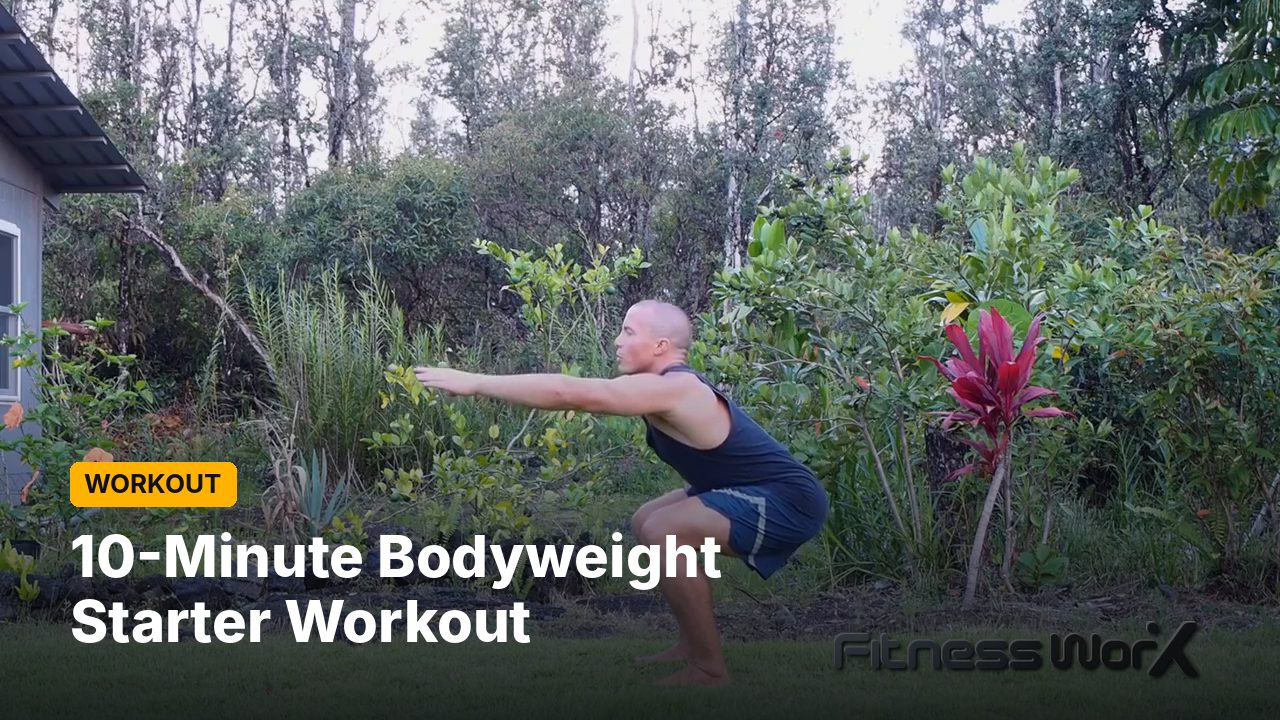
It is done on the floor with no weight on your knees, so it is a gentle strength move for beginners and adults over 40. It also pairs well with the bodyweight squat to build stronger hips and legs.
At a glance
- Works: glutes, hamstrings, lower back muscles and core
- Equipment: none; an exercise mat or a rug makes it more comfortable
- Level: beginner
- Beginner sets and reps: 2 sets of 10 reps with a 2-second squeeze at the top
How to Do a Glute Bridge
- Lie on your back. Bend your knees and place your feet flat on the floor, about hip-width apart. Your heels should be close enough that your fingertips can almost touch them.
- Set your arms. Rest your arms by your sides with your palms down. Relax your neck and shoulders.
- Brace your middle. Gently tighten your stomach muscles so your lower back is in a neutral position, not arched.
- Lift your hips. Press through your heels and squeeze your glutes to raise your hips. Stop when your body forms a straight line from shoulders to knees.
- Pause at the top. Hold for one or two seconds and keep squeezing your glutes. Your ribs should stay down, not flare up.
- Lower slowly. Roll your hips back down to the floor over two or three seconds.
- Breathe steadily. Breathe out as you lift and breathe in as you lower.
Common Mistakes
- Arching the lower back. Pushing your hips too high shifts the work into your lower back. Stop at a straight line and think about squeezing your glutes, not lifting your belly.
- Feet too far away. If your hamstrings cramp, your feet are probably too far from your hips. Move them a few inches closer.
- Pushing through the toes. This makes the front of your thighs take over. Press through your heels and the middle of your feet.
- Knees falling in or out. Keep your knees in line with your hips and feet throughout. Imagine holding a soft ball between them.
- Rushing. Bouncing your hips up and down uses momentum instead of muscle. Lift, pause, then lower under control.
Easier and Harder Versions
To make it easier, lift your hips only a few inches and build up height over time. You can also press your arms firmly into the floor for extra support. If lying flat is uncomfortable, a folded towel under your head may help.
To make it harder, hold the top position for 10 to 20 seconds. Next, try a marching bridge: lift your hips, then raise one foot a few inches at a time while keeping your hips level. A single-leg bridge, with one leg straight in the air, is a bigger step. You can also loop a resistance band just above your knees and press gently out against it.
Sets, Reps and How Often
Start with 2 sets of 10 reps, resting 30 to 60 seconds between sets. Do them 2 or 3 days a week, or on most days if they feel easy on your body. Add a few reps each week until you reach 15 to 20, then move to a harder version.
Bridges fit nicely into a short routine. Try them as part of our 10-minute bodyweight starter workout, and finish with a few gentle stretches from the stretching routine generator. For more ideas, visit the exercises hub.
Safety
- Stop if you feel sharp pain in your lower back, hips or knees, or a cramp that will not ease.
- Skip or modify if you have had recent back, hip or abdominal surgery. Ask your doctor or physiotherapist when to start.
- If you have a back problem, keep the lift small and stop well before any pain.
- If you are pregnant, many guidelines advise against lying flat on your back for long periods later in pregnancy. Check with your midwife or doctor first.
- Your neck should stay relaxed. Do not push your head into the floor.
Free tool
Workout Generator
Add glute bridges to a full workout that matches your time and level.
FAQ
What does the glute bridge work?
It mainly works your glutes and hamstrings. Your core and the muscles along your lower back also help to keep your body steady.
Why do I feel glute bridges in my hamstrings?
This is common when your feet are too far from your hips. Move your feet closer and focus on squeezing your glutes at the top.
Can I do glute bridges every day?
Many people can, because the move is low impact. Start with a few days a week, then add more if your back and hips feel fine.
This page is for general information and isn’t a substitute for advice from your doctor, physiotherapist or another qualified health professional. Check with them before starting a new exercise program, especially if you have a health condition or injury, are pregnant or have recently given birth. Stop if you feel pain, dizziness or unusual shortness of breath.