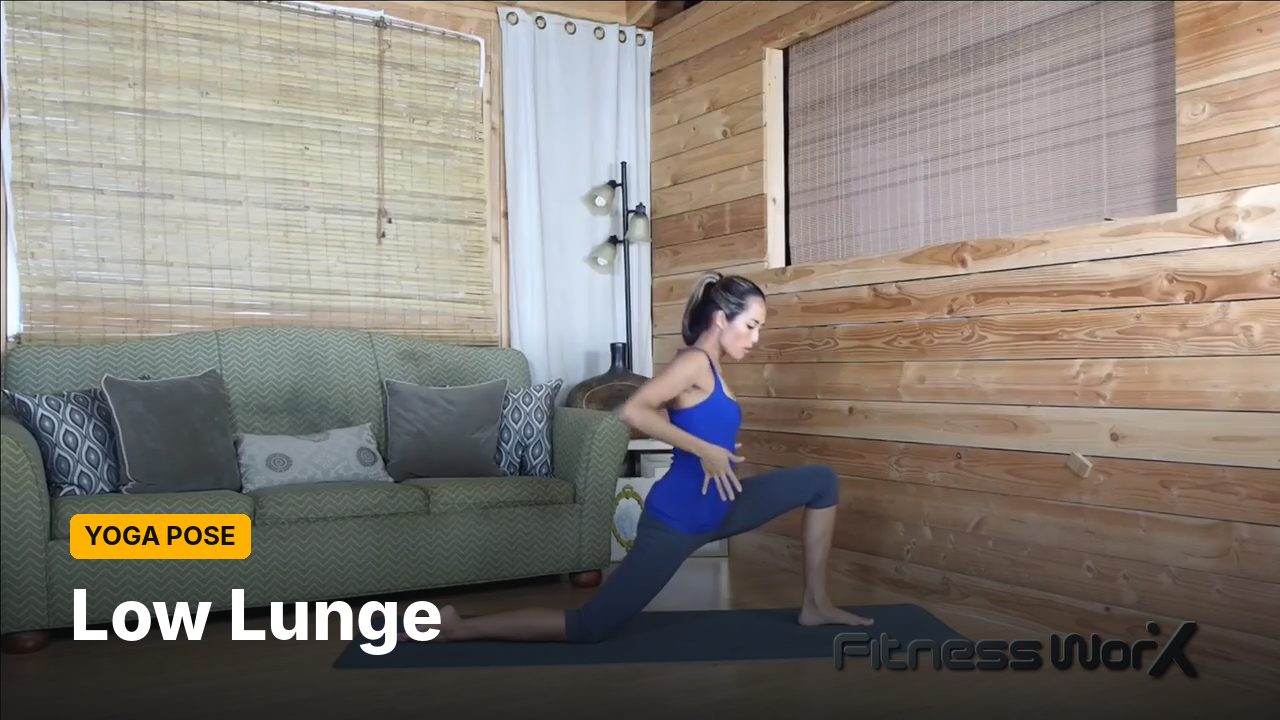
Low Lunge (Anjaneyasana) is a kneeling lunge with one foot forward and the back knee resting on the mat. It stretches the front of the back hip and thigh, the area that gets short and tight when you sit for long hours. It also gently works the legs and asks for steady balance.
Because the back knee is down, it is far more stable than a standing lunge. That makes it a good choice for beginners and for anyone who wants a hip stretch without a lot of strain on the legs.
At a glance
- Type: kneeling lunge, hip flexor stretch and gentle backbend
- Level: beginner
- Hold: 5 slow breaths per side, up to 1 minute
- Props: folded blanket or towel for the back knee; two blocks or thick books for the hands
How to Do Low Lunge
The instructor starts standing, folds forward and steps one leg back with her hands beside her front foot. She lowers the back knee, lifts her chest and reaches her arms up. Between rounds she rests her hands on her hips or front thigh, then lifts them again.
- Start in a forward fold or on all fours. Place your hands on the mat or on blocks. Step your right foot forward between your hands.
- Lower the back knee. Slide your left leg back and rest the knee on a folded blanket. Let the top of the back foot lie flat on the mat.
- Line up the front leg. Your right knee should sit over your ankle, or a little behind it. Keep your front foot flat and toes pointing forward.
- Lift your chest. Bring your hands to your front thigh and slowly rise up. Draw your belly in gently and let your tailbone point down.
- Reach up if it feels steady. Breathe in and raise your arms overhead, shoulders relaxed. Let your hips sink forward a little until you feel a stretch at the front of the left hip.
- Breathe and come out. Stay for about 5 breaths. Lower your hands to the mat, step back to all fours and repeat on the other side.
Benefits of Low Lunge
The main effect is a stretch along the front of the back hip and thigh. Long hours in a chair keep these muscles in a shortened position, and many people find the stretch eases that tight, folded feeling. The front leg and buttock muscles also work to hold you steady.
With the arms raised, the pose adds a light lift through the chest and sides. It is a useful stretch before a walk or after a day at a desk. It will not change your posture on its own, but it can be one helpful part of a regular routine.
Modifications
- Pad the back knee: Fold your mat over, or add a blanket or towel. Kneeling should never feel sharp.
- Hands on blocks: Keep your hands on blocks or a sturdy chair seat on either side of the front foot. This takes weight off the legs and back.
- Hands on the thigh: Skip the arm raise and rest your hands on your front thigh, as the instructor does between rounds.
- Shorter stance: If the stretch is too strong, move the front foot back a little so the hips do not sink as far.
Skip or change this pose if
- you have knee pain when kneeling. Use thick padding, or try a standing lunge with a chair for support instead.
- you feel pinching in the front of the hip or groin. Lift the hips back a little and shorten the stance.
- your lower back aches when you lift your arms. Keep your hands on your thigh and draw your belly in.
- you have a recent hip, knee or back injury or surgery. Check with your doctor or physiotherapist first.
- you are pregnant. Widen your front foot out to the side for room and keep a chair close for balance.
Stop if you feel sharp pain, numbness or tingling in the legs.
Poses That Go Well With Low Lunge
Low Lunge sits naturally in a short home sequence. Try a few rounds of Cat-Cow to warm up, then Low Lunge on each side, then a gentle backbend such as Fish Pose. Finish with Child’s Pose to let the hips and back rest.
Our guide to building a 10-minute home yoga practice shows how to put poses like this in order. For more demos, see our yoga pose videos. If you are just getting started, read yoga for beginners first, or build your own sequence with the Yoga Flow Builder.
Yoga
Practice with a guided session
Pick your time and level and follow a yoga session with a video for every pose.
FAQ
What does Low Lunge stretch?
It mainly stretches the front of the back hip and the top of the back thigh. With the arms up, you also feel a light stretch along the sides of the body and the front of the chest.
Why does my back knee hurt in Low Lunge?
Usually because the floor is too hard or the knee is taking too much weight. Add a folded blanket and shift your weight forward into the front foot. If it still hurts, try a standing version.
Is Low Lunge the same as Crescent Lunge?
Not quite. In Low Lunge the back knee rests on the floor. In Crescent Lunge, also called High Lunge, the back knee lifts and you balance on the ball of the back foot, which is harder.
This page is for general information and isn’t a substitute for advice from your doctor, physiotherapist or another qualified health professional. Check with them before starting a new exercise program, especially if you have a health condition or injury, are pregnant or have recently given birth. Stop if you feel pain, dizziness or unusual shortness of breath.