A push-up looks simple, but it asks a lot. You lower your whole body toward the floor and press it back up, which works your chest, shoulders, triceps and core at the same time.
Many adults cannot do a full push-up at first, and that is fine. This page shows you the standard version, then the knee push-up and wall push-up so you can start where you are and build up.
At a glance
- Works: chest, front of the shoulders, triceps and core
- Equipment: none; a mat helps if you use the knee version
- Level: beginner (wall or knee version) to intermediate (full push-up)
- Beginner sets and reps: 2 sets of 5 to 8 reps of the version you can do with good form
How to Do a Push-Up
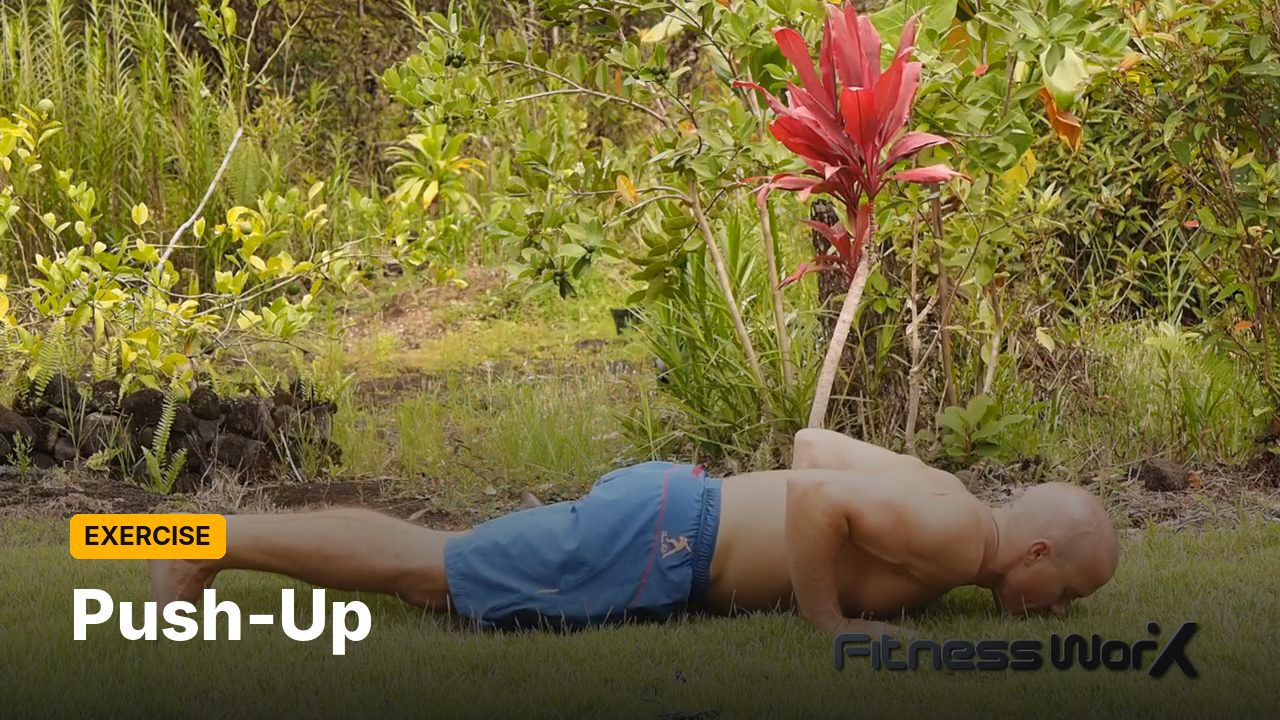
- Place your hands. Put your hands on the floor slightly wider than your shoulders, fingers pointing forward.
- Form a straight line. Step your feet back so your body is straight from head to heels. Tighten your stomach and glutes to hold this line.
- Set your head. Look at the floor just in front of your hands so your neck stays in line with your spine.
- Lower with control. Bend your elbows and lower your chest toward the floor. Keep your elbows at roughly 45 degrees from your body, not flared straight out.
- Go as low as you can. Aim to bring your chest a few inches from the floor while your body stays straight.
- Press back up. Push the floor away and straighten your arms, moving your body as one piece.
- Breathe. Breathe in as you lower and breathe out as you press up.
Common Mistakes
- Sagging hips. If your hips drop toward the floor, your lower back takes the strain. Squeeze your glutes and stomach, or switch to the knee version.
- Hips too high. A pike shape makes the move easier but less useful. Lower your hips until your body is straight.
- Elbows flared wide. This puts more stress on the shoulders. Tuck your elbows in toward your sides a little.
- Half reps. Only bending your elbows a little means less work for your chest. Use an easier version so you can move through a bigger range.
- Dropping your head. Reaching for the floor with your chin strains the neck. Keep your head in line and let your chest lead.
Easier and Harder Versions
The knee push-up is the most common starting point. Keep the same straight line from your head to your knees, not your heels. Pad your knees with a mat or folded towel.
If the knee version is still too hard, try a wall push-up. Stand an arm’s length from a wall, place your hands on it at chest height and bend your elbows to bring your chest toward the wall. An incline push-up, with your hands on a kitchen counter or a sturdy table, sits between the wall and the floor.
When you can do 2 sets of 10 full push-ups with good form, make them harder. Lower more slowly, pause just above the floor, or raise your feet on a low step for a decline push-up.
Sets, Reps and How Often
Start with 2 sets of 5 to 8 reps of the version that lets you keep a straight body. Rest a minute between sets and train 2 or 3 days a week with a day off between. When you can do 12 good reps, move to the next harder version.
Push-ups go well with lower body moves. Pair them with the bodyweight squat and the glute bridge, or follow our 10-minute bodyweight starter workout, which uses knee push-ups.
Safety
- Stop if you feel sharp pain in your shoulders, elbows, wrists or lower back, or if you feel dizzy or have chest pain.
- Skip or modify if you have a recent shoulder or wrist injury or surgery. The wall version puts much less load on these joints.
- Sore wrists? Try making fists, or hold the handles of push-up bars or two sturdy dumbbells, to keep your wrists straighter.
- If you have high blood pressure, breathe steadily and do not hold your breath.
- If you are pregnant, wall or incline push-ups are usually more comfortable. Check with your midwife or doctor.
Free tool
Push-Up Test
See how many push-ups you can do now and track your progress with our free push-up test.
FAQ
Do knee push-ups build strength?
Yes. Knee push-ups work the same muscles with less body weight. Many people build up to full push-ups by doing them for a few weeks.
How many push-ups should a beginner do?
Start with 2 sets of 5 to 8 reps of whichever version you can do with good form. Quality matters more than the number.
Why can’t I do a single push-up?
A full push-up lifts a large share of your body weight, so it is hard at first. Start with wall or knee push-ups and you will usually see progress within a few weeks.
This page is for general information and isn’t a substitute for advice from your doctor, physiotherapist or another qualified health professional. Check with them before starting a new exercise program, especially if you have a health condition or injury, are pregnant or have recently given birth. Stop if you feel pain, dizziness or unusual shortness of breath.