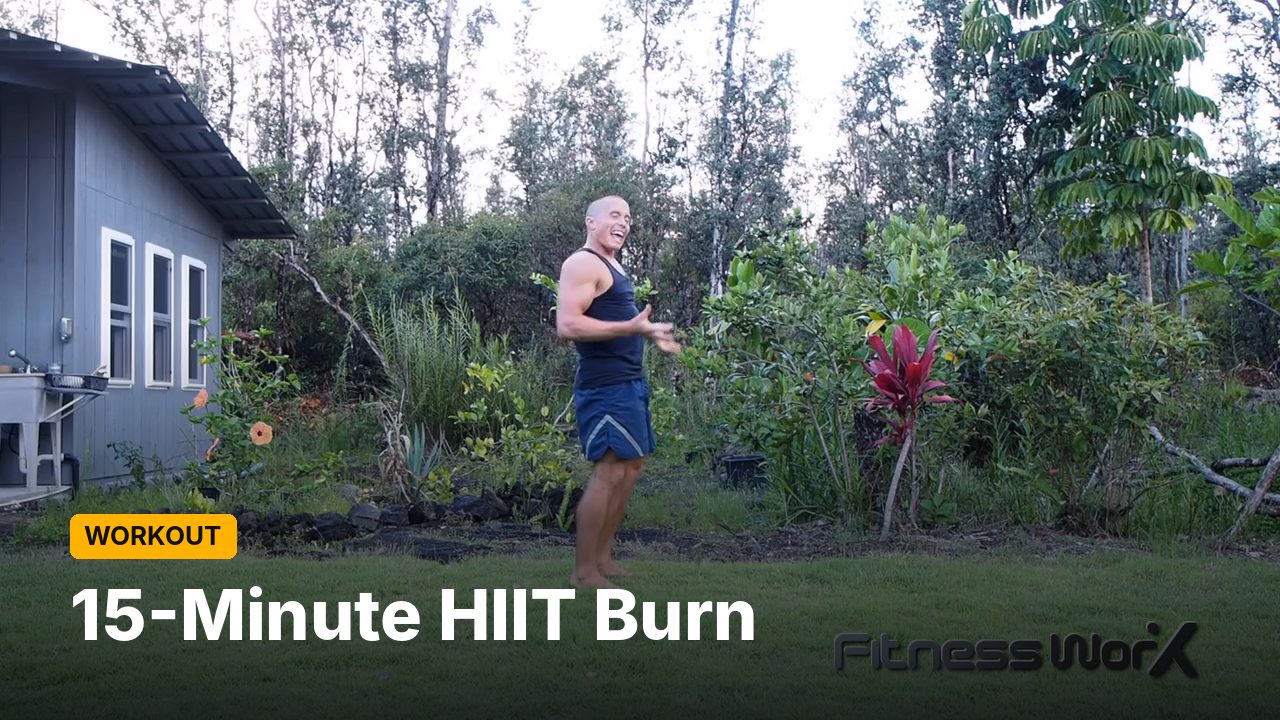
This 15-minute HIIT workout is a step up from a first beginner routine. It mixes fast moves like burpees and skater hops with a plank to finish each round. You need no equipment, just enough space to take a big step to each side.
HIIT stands for high-intensity interval training: short bursts of hard work with short rests in between. The 15 minutes covers the main workout only. Add a 3-minute warm-up and a 3-minute cool-down, so the full session takes about 21 minutes. If you have not tried intervals before, start with our 4-minute Tabata workout and build up to this one.
Workout at a glance
- Time: 15 minutes of work, plus about 6 minutes of warm-up and cool-down
- Rounds: 3 rounds of 6 moves
- Work and rest: 30 seconds of work, 20 seconds of rest
- Equipment: none
- Level: beginner to intermediate, with low-impact options
Warm-Up
Take 3 minutes to raise your heart rate slowly. March on the spot for 1 minute. Then do 30 seconds each of arm circles, side steps with an arm reach, slow bodyweight squats and walking in place with high knees. By the end you should feel warm and ready, not out of breath.
The Workout
Each move lasts 30 seconds, followed by 20 seconds of rest. Six moves take 5 minutes, so three rounds make exactly 15 minutes. The 20-second rest after the plank leads straight into the next round. Aim for an effort of about 7 out of 10, where talking is hard but possible in a few words.
| Move | Time or reps | Rest |
|---|---|---|
| Burpee | 30 seconds | 20 seconds |
| Skater hops | 30 seconds | 20 seconds |
| Mountain climbers | 30 seconds | 20 seconds |
| Jump squat | 30 seconds | 20 seconds |
| High knees | 30 seconds | 20 seconds |
| Plank | 30 seconds | 20 seconds, then repeat (3 rounds) |
1. Burpee
Squat down, place your hands on the floor, jump or step your feet back to a plank, then bring them back in and stand or jump up. Keep your back flat in the plank. For low impact, step back one foot at a time and skip the jump at the top.
2. Skater Hops
Hop sideways onto your right foot and let your left foot swing behind you, then hop back to the left. Land softly with a slight bend in the knee. The low-impact version is a side step into a small curtsy, with no hop.
3. Mountain Climbers
From a high plank, drive your knees toward your chest one at a time. Keep your shoulders over your hands and your hips level. Slow it down, or put your hands on a sturdy chair, if your wrists or lower back complain.
4. Jump Squat
Lower into a squat, then jump straight up and land softly back into the next squat. Let your knees bend as you land. For low impact, do a regular squat and rise onto your toes at the top.
5. High Knees
Run on the spot, lifting your knees toward hip height and pumping your arms. Stay tall and light on your feet. The low-impact option is a quick march with high knees.
6. Plank
Hold a forearm plank with your elbows under your shoulders and your body in one straight line. Breathe slowly; this is your chance to bring your breathing down while your core keeps working. Drop to your knees if your form slips. Our plank guide covers form in more detail.
Cool-Down
Spend about 3 minutes bringing your heart rate down. Walk slowly for 1 minute, then stretch your thighs, hamstrings, calves and chest for about 20 seconds each. Breathe slowly through your nose. A gentle walk later in the day is also a nice way to recover. Our after-dinner walk guide explains how to start one.
Make It Easier or Harder
Easier:
- Use all the low-impact versions. You still get a good workout without any jumping.
- Work for 20 seconds and rest for 30 seconds.
- Do 2 rounds (10 minutes) and add the third round when you are ready.
- Rest for an extra minute between rounds if you need it. The session will just take a little longer.
Harder:
- Work for 40 seconds and rest for 20. Three rounds then take 18 minutes.
- Add a push-up at the bottom of each burpee.
- Add a fourth round once three feel manageable.
Two or three HIIT sessions a week is plenty for most people. Fill the other days with walking, strength work or stretching.
Safety Tips
Stop right away if you feel chest pain, dizziness, faintness or unusual shortness of breath. Choose the low-impact moves if you have knee, hip, ankle or back problems, are pregnant, or have pelvic floor concerns. Speak with your doctor before starting high-intensity exercise if you have high blood pressure or a heart condition, or have been inactive for a long time. The Heart Rate Zone Calculator can help you see how hard you are working.
Free tool
Interval Timer (HIIT & Tabata)
Set the Interval Timer to 30 seconds on, 20 seconds off and 18 intervals to run this whole workout.
FAQ
Is 15 minutes of HIIT a good workout?
For most people, yes. Fifteen minutes of honest effort is a solid session, and it is easier to keep up than a long workout you rarely do.
Can I do HIIT if I have bad knees?
Often you can, if you use the low-impact versions and keep your squats to a comfortable depth. Stop any move that causes knee pain and ask a physio or doctor for advice if it keeps happening.
Should I do HIIT on an empty stomach?
There is no need to. Some people feel fine training before breakfast, while others feel shaky. A small snack an hour or so before is a sensible choice if you feel low on energy.
This page is for general information and isn’t a substitute for advice from your doctor, physiotherapist or another qualified health professional. Check with them before starting a new exercise program, especially if you have a health condition or injury, are pregnant or have recently given birth. Stop if you feel pain, dizziness or unusual shortness of breath.