The plank does not move at all, yet it is one of the best-known core exercises. You hold your body straight like a board, resting on your forearms and toes, and your stomach, back, shoulders and glutes all work to keep you there.
Planks build the kind of core strength that helps you stay steady when you lift, carry and twist in daily life. Beginners can start with short holds or an easier position and add time week by week.
At a glance
- Works: deep stomach muscles, obliques, lower back, shoulders and glutes
- Equipment: none; a mat makes your forearms more comfortable
- Level: beginner (knee or incline plank) to intermediate (full plank)
- Beginner sets and reps: 3 holds of 10 to 20 seconds, with 30 seconds rest
How to Do a Plank
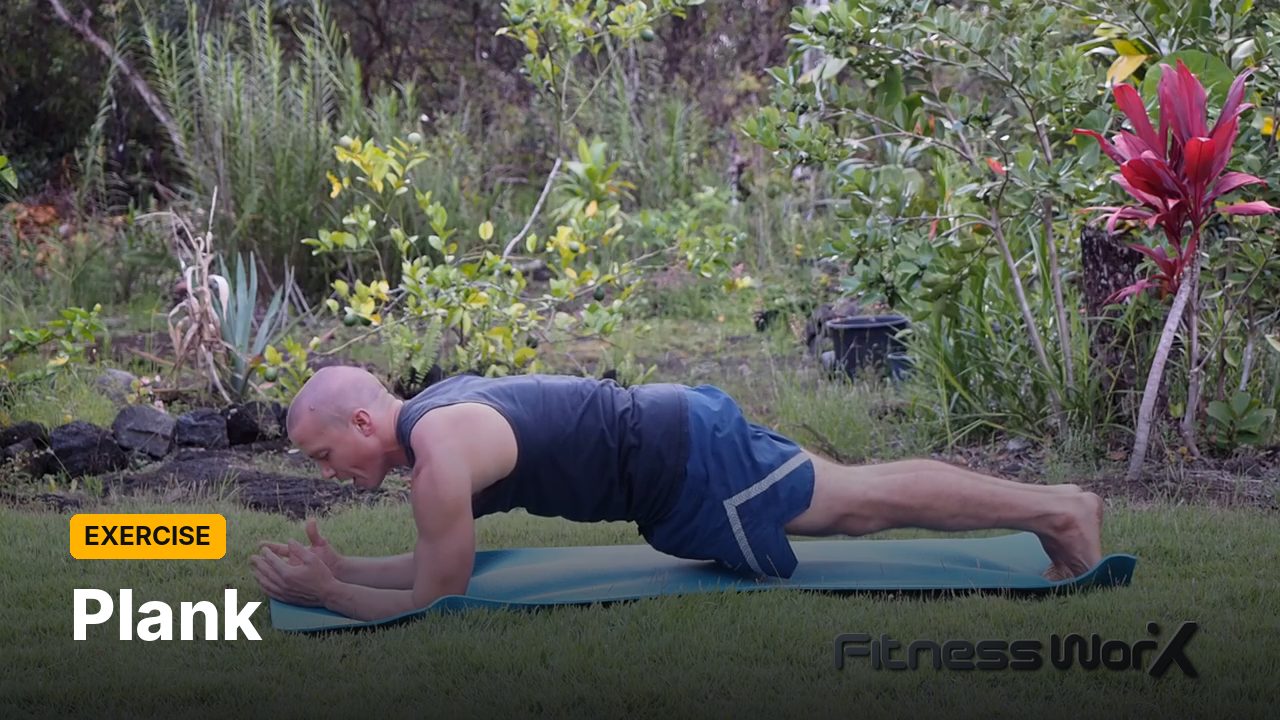
- Start on your forearms. Kneel on a mat and place your forearms on the floor, elbows right under your shoulders. Your hands can rest flat or loosely clasped.
- Step back. Straighten one leg back, then the other, so you rest on your forearms and toes. Your feet can be hip-width apart.
- Make a straight line. Your head, shoulders, hips and heels should form one line. Look at the floor a little in front of your hands.
- Switch on your core. Gently pull your belly button toward your spine and squeeze your glutes. Press the floor away so your upper back does not sink.
- Hold and breathe. Breathe slowly and steadily for your chosen time. Do not hold your breath.
- Come down with care. Lower your knees to the floor first, then rest in a kneeling position.
Common Mistakes
- Hips sagging. This is the most common error, and it puts strain on your lower back. Squeeze your glutes and tighten your stomach, or drop to your knees.
- Hips too high. A raised bottom takes the work off your core. Lower your hips until they line up with your shoulders and heels.
- Shoulders sinking. Letting your chest drop between your shoulder blades loads the shoulders. Push your forearms into the floor to keep your upper back broad.
- Holding your breath. This raises tension and can make you feel light-headed. Count your breaths instead of the seconds.
- Chasing long holds. A sloppy two-minute plank is worth less than a solid 20 seconds. Stop when your form starts to slip.
Easier and Harder Versions
The knee plank is the easiest floor version. Keep your forearms in place but rest on your knees, with a straight line from your head to your knees. An incline plank, with your forearms or hands on a kitchen counter or the seat of a sturdy sofa, is gentler still and good if getting down to the floor is hard.
When you can hold a full plank for 45 to 60 seconds with good form, try a high plank on straight arms or add slow shoulder taps. A side plank, resting on one forearm with your body turned to the side, works the obliques and is a good next challenge.
Sets, Reps and How Often
Start with 3 holds of 10 to 20 seconds and rest 30 seconds between them. Plank 3 or 4 days a week. Each week, add 5 seconds to each hold until you reach about 60 seconds, then choose a harder version instead of holding longer.
A stopwatch and rest timer makes it easy to track your holds. Planks fit well after push-ups or forward lunges, and they are part of our 10-minute bodyweight starter workout.
Safety
- Stop if you feel pain in your lower back, shoulders or wrists, or if you feel dizzy.
- Skip or modify if you have had recent abdominal, back or shoulder surgery. Ask your doctor or physiotherapist when to start.
- If you have high blood pressure, keep holds short, breathe steadily and never hold your breath.
- If you are pregnant or have abdominal separation after birth, check with your midwife or a women’s health physiotherapist. The incline plank may be a better choice.
- Rest on a mat or folded towel to protect your elbows and knees.
Free tool
Plank Test
Find out how long you can hold a plank today with our free plank test.
FAQ
How long should a beginner hold a plank?
Start with 10 to 20 seconds and repeat it three times. Add a few seconds each week. Good form matters more than a long time.
Is a plank better on hands or forearms?
Both work your core. The forearm plank is easier on the wrists, while the high plank on straight arms works your shoulders a bit more.
Why does my lower back hurt when I plank?
Usually your hips are sagging. Squeeze your glutes, shorten the hold or drop to your knees. If pain continues, stop and speak to a health professional.
This page is for general information and isn’t a substitute for advice from your doctor, physiotherapist or another qualified health professional. Check with them before starting a new exercise program, especially if you have a health condition or injury, are pregnant or have recently given birth. Stop if you feel pain, dizziness or unusual shortness of breath.