Every time you step forward to pick something up or climb a high step, you do a small lunge. The forward lunge trains that pattern on purpose. It works your thighs and glutes one leg at a time and asks your balance to join in.
Because each leg works on its own, lunges can show up a weaker side that squats hide. They suit beginners who are comfortable with the bodyweight squat and want a next step that also trains balance.
At a glance
- Works: quadriceps, glutes, hamstrings, calves and the small muscles that help you balance
- Equipment: none; a chair or wall nearby for balance is helpful
- Level: beginner to intermediate
- Beginner sets and reps: 2 sets of 6 to 8 reps on each leg
How to Do a Forward Lunge
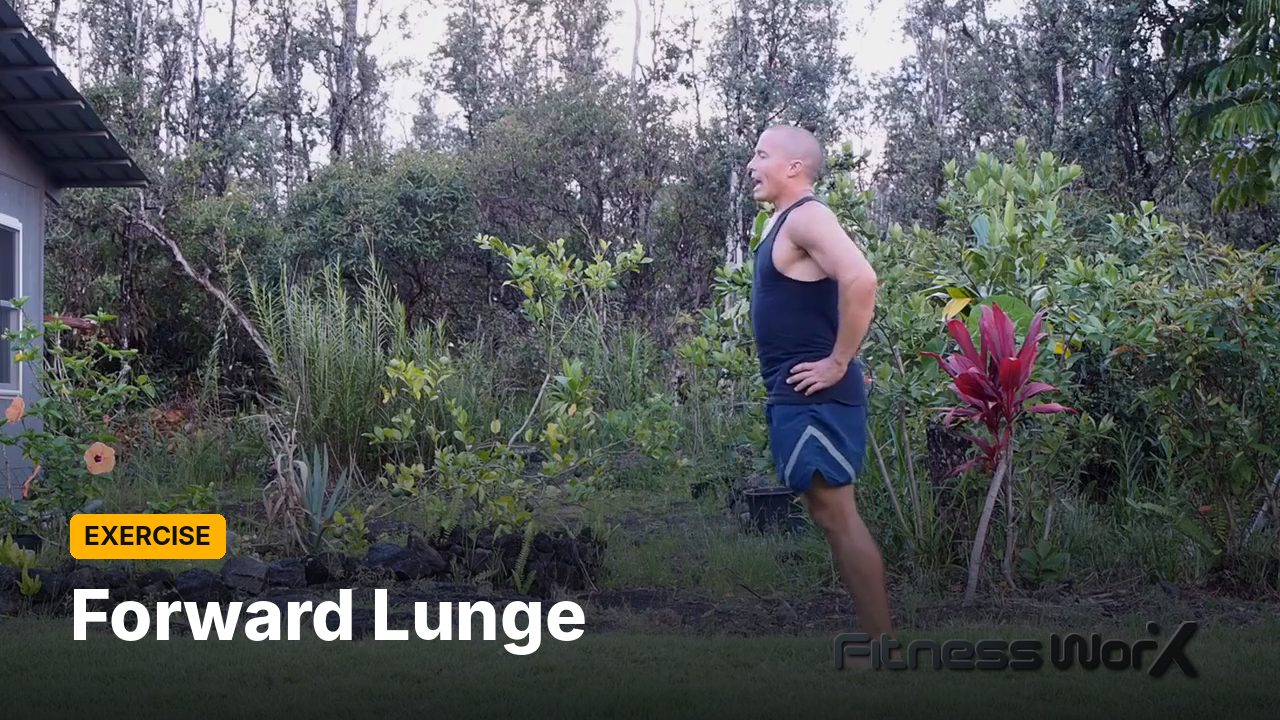
- Stand tall. Place your feet hip-width apart and your hands on your hips or by your sides. Tighten your stomach muscles gently.
- Step forward. Take a long step forward with your right foot, about two to three feet. Land heel first, then put the whole foot down.
- Lower straight down. Bend both knees and drop your back knee toward the floor. Think “down”, not “forward”.
- Check your position. At the bottom, your front knee should be over your ankle and your back knee should hover just above the floor. Keep your upper body upright.
- Push back. Press firmly through your front heel to push yourself back to the starting position.
- Switch legs. Repeat with your left leg, or finish all reps on one side first.
- Breathe. Breathe in as you lower and breathe out as you push back up.
Common Mistakes
- Step too short. A short step pushes your front knee far past your toes and loads the knee. Take a longer stride so your shin stays fairly upright.
- Front knee falling inward. Keep your knee in line with your second toe. If it keeps caving in, reduce the depth.
- Leaning forward. Tipping your chest over your front knee strains your lower back. Keep your shoulders above your hips.
- Feet on a tightrope. Stepping in a straight line makes balance hard. Keep your feet hip-width apart, as if on two train tracks.
- Banging the back knee. Dropping fast can knock your knee on the floor. Lower slowly and stop an inch or two above it.
Easier and Harder Versions
If stepping forward feels wobbly, start with a static split squat. Stand in a staggered stance, one foot forward and one back, and simply lower and lift without stepping. Hold a chair or the wall for balance. A reverse lunge, stepping backward instead of forward, is also easier on the knees for many people.
To make it harder, slow down and pause for a second at the bottom. You can also hold a dumbbell or a full water bottle in each hand. Walking lunges, where you keep stepping forward across the room, add more balance and endurance work.
Sets, Reps and How Often
Begin with 2 sets of 6 to 8 reps on each leg, resting 60 to 90 seconds between sets. Train 2 or 3 days a week with a rest day between. Add one or two reps each week until you reach 12 per leg, then try a harder version.
Warm up your hips before you lunge with a few minutes of marching and leg swings. Lunges work well alongside push-ups and the glute bridge for a simple full-body session. Afterward, the low lunge yoga pose is a gentle way to stretch the front of your hips.
Safety
- Stop if you feel sharp pain in your knees, hips or back, or if you lose your balance.
- Skip or modify if you have knee pain, a recent knee or hip injury, or a joint replacement. Try the static split squat with support, or ask your physiotherapist.
- If your balance is unsteady, always lunge next to a sturdy chair, wall or counter.
- If you are pregnant, your balance may change. Use support and keep the step short and controlled.
- Choose a non-slip floor and wear supportive shoes or go barefoot on a mat.
Free tool
Warm-Up Generator
Get your hips and knees ready for lunges with a quick warm-up made for you.
FAQ
Are forward lunges or reverse lunges better for beginners?
Reverse lunges are often easier on the knees and balance, so many beginners start there. Forward lunges train you to control your body as you step and stop, which is useful too.
Should my knee go past my toes in a lunge?
A little is fine for most people. The main goal is to keep your knee in line with your toes and your weight in your front heel.
Why do lunges make me wobble?
Lunges ask each leg to balance on its own, so wobbling is normal at first. Widen your stance, slow down and hold a chair until your balance improves.
This page is for general information and isn’t a substitute for advice from your doctor, physiotherapist or another qualified health professional. Check with them before starting a new exercise program, especially if you have a health condition or injury, are pregnant or have recently given birth. Stop if you feel pain, dizziness or unusual shortness of breath.